We Love You, Clay Court Tennis
Read on to find 3 tips for playing on clay and see how "the dirt” might become your new favorite surface to play on.
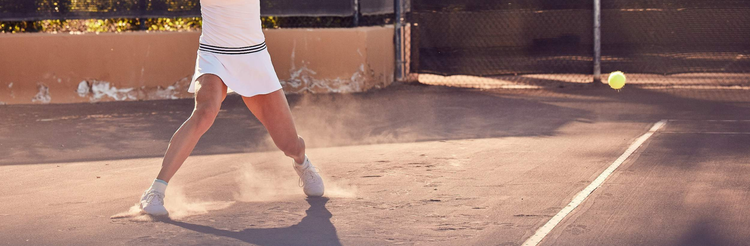
Clay court tennis holds a special place in our hearts, and here we’ve gathered everything we love about this surface.
From the unpredictable bounces to the masterful chess-like strategies, to all the clay-ridden pieces of clothing, clay court tennis is one of the most popular surfaces for tennis players to use. The tennis world is fully tuned in to clay court season from the beginning of April to around the middle of June. All eyes are focused on the red dirt, and you can practically feel the excitement in the air. But why all the hype? Why do so many people love playing on clay courts? What makes them so special? Three things: the court, the strategy, and the ball.

The Court
There are three main tennis court surfaces: grass, hard, and clay. Of the three, clay is by far the slowest, most forgiving surface on your body. Because the top-most layer is composed of crushed brick, it provides a “cushioning” effect that puts less pressure on your joints. It is very common for players who struggle with injuries or are seeking to avoid them to choose to play on clay courts. Your knees will thank you for choosing to play those long sets on clay rather than a hard court!
Within the clay court surfaces, there are two main types: red and green clay. The most common surface played on in Europe and Latin America is a gritty red clay court. This is the slowest tennis court surface because the fine layer of clay on the topmost surface “grabs” the ball, which drastically reduces its speed and causes the ball to bounce much higher. The most famous, historical clay court tennis tournament in the world is Roland-Garros, also known as the French Open, which is one of the four annual Grand Slams. Players and fans travel from across the globe to see who will reign as champion of the Internationaux de France de tennis. Leading up to the main event are several Masters 1000 tournaments, including the Monte Carlo Masters, Madrid Open and Internazionali BNL d’Italia.
On the other hand, the typical clay court surface played on in the United States and Canada is the green clay, also known as Rubico. Rather than layers of crushed brick, this surface is composed of crushed metabasalt and green clay. Since the clay particles on the top layer are slightly larger than that of red clay, green clay courts play a bit faster than red. It’s still a much slower surface than hard courts, and it’s a great option to play on if you are worried about joint pain and injuries.
The Strategy
Clay court tennis is the equivalent of playing a strategic game of chess: it consists of long, grinding points, inconsistent and unpredictable bounces, slicing and dicing, sliding, and gliding. What's different about clay court tennis is you never know what type of bounce you are going to get since its top layer is made up of crushed brick. Also, since the lines are raised, there’s a chance your opponent will hit the ball on a nail pegged into the ground and cause it to go in the exact opposite direction you thought it would go (Frustrating? Oh yes).
While these bounces might drive you crazy at times, adjusting your strategy to prepare for these surprises is key. Like we learned earlier, the clay really holds on to the ball, slows it down after the bounce, and makes it jump up high off the ground. Because of these variables, players should adapt their shot selection and movement to accommodate this surface.
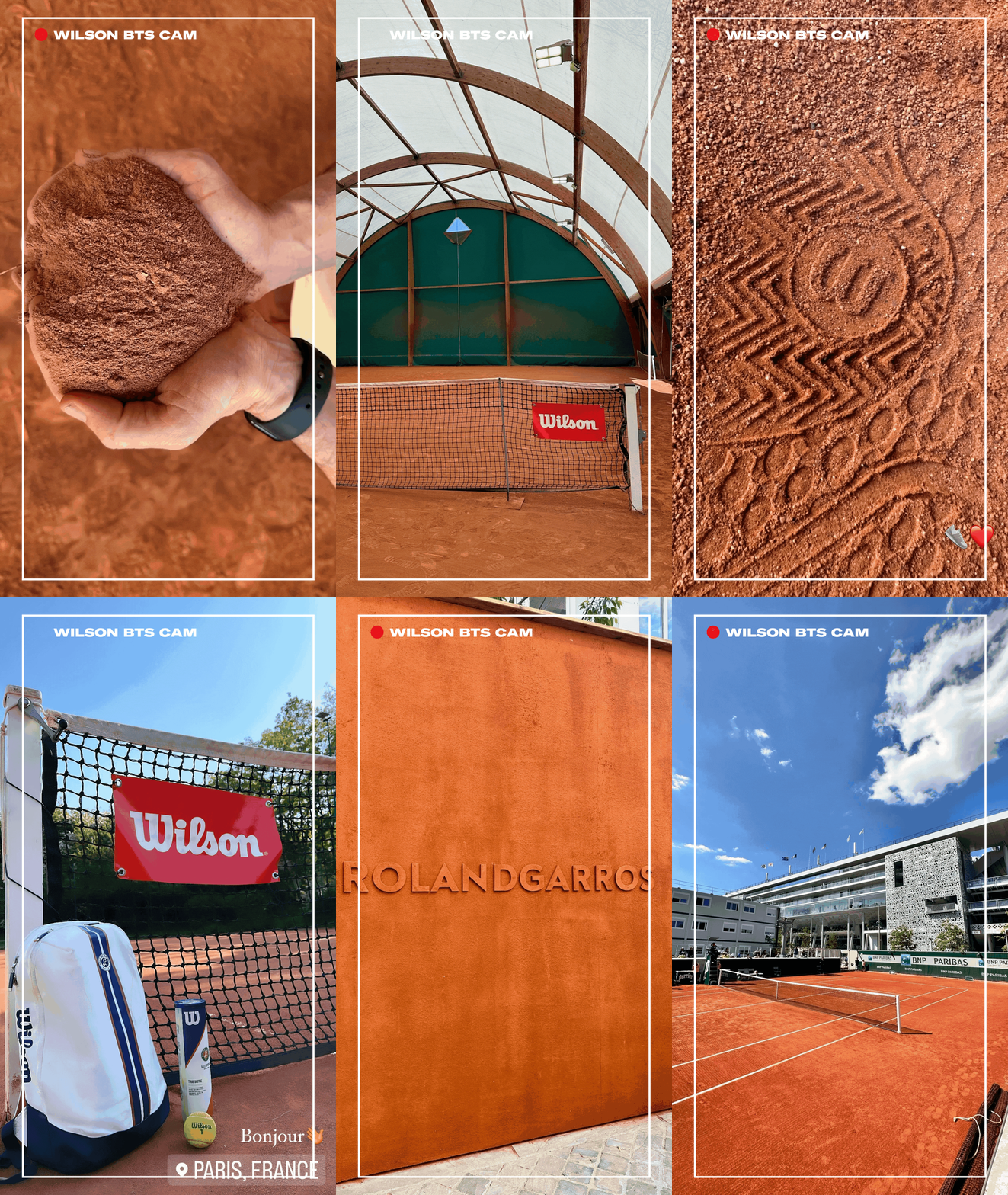
Behind-The-Scenes Content from the famed red clay at Roland-Garros
3 Tips for Playing on Clay
1. Back It Up
There is no need to fear standing farther behind the baseline. Since the ball tends to bounce slower and higher after the bounce, it would be best to take a step or two back to give yourself enough time to hit the ball in your strike zone. Players also tend to hit more topspin on their shots, so giving yourself that extra time and space to get in position will help you tremendously.
2. Slide, Baby, Slide
Learning how to slide into position will not only help you get to the ball sooner, but it will also help you recover quicker. Learning how to slide on the clay can be challenging at first, but once you’ve mastered it, you won’t regret it. Especially when your opponents hit a ball that puts you on the stretch, the slide can help you efficiently and effectively get to the shot and get back into the point.
3. Variety is Key
Change up your shots. Since the bounces on this surface are so inconsistent and unpredictable, having a variety of shots in your toolbox will come in handy. Movement on clay is tricky, and some (most) people don’t know how to properly slide and get to the ball on a clay court. Capitalize on this by hitting angled shots off the court, slicing low balls over the net, and even throwing in a dropshot or two. This can drive your opponent crazy and prevent them from getting a rhythm.
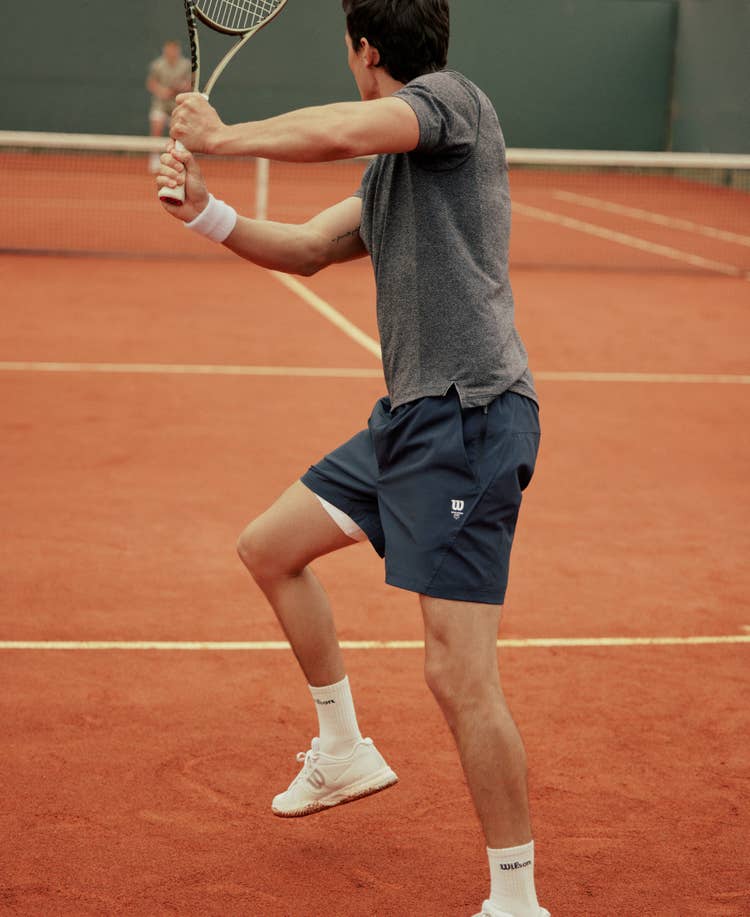
Check Out Our Newest Sportswear
The Ball
Clay court tennis should be played with a clay court ball. No question. There is a big difference between hard court and clay court balls. If you are playing on a clay court and want them to last for more than just a set, you should really consider playing with a clay-specific ball. These are typically composed of a special core designed for longer rallies and a felt that limits the amount of clay getting stuck within the fuzz. We might be biased, but we advise that you use Wilson’s Roland-Garros Clay balls, which are the official ball of the iconic French Open Grand Slam tennis tournament.
Why We Love the Clay
It’s pretty easy to understand why clay court tennis is so popular around the world and why people love it so much. Some question if it is hard to play clay court tennis, but really it’s just different. Yes, it’s a trickier surface to play on because of the inconsistent bounces, but it’s also common to see longer, more exciting rallies that are hit with a variety of shots. There are more sneaky drop shots, knifing slices, and barely reached defensive jabs. Not to mention that this is the best surface to play on if you are trying to avoid injuries.
All in all, clay is a great for your body and developing your game. But don’t just take our word for it. Check out your nearest clay court and try it out for yourself.