How NFL Footballs are Made
Take a behind the scenes look at how every NFL Wilson Duke leather game ball is made from start to finish.
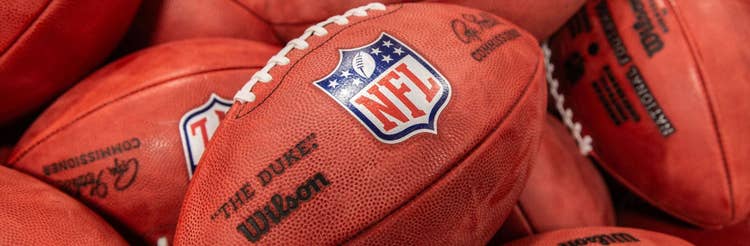
Each Wilson “The Duke” NFL football is crafted using a meticulous 6-step process that includes cutting, stamping, sewing, turning, lacing, and molding. As the Official Game Football of the NFL since 1941, Wilson has been at the heart of every snap, play, and touchdown in NFL history. Manufactured in Ada, Ohio, since 1955, these footballs are a symbol of quality and tradition. Take a behind-the-scenes look at how every NFL Duke leather game ball is made, from selecting the perfect leather panels to the final inspection that ensures each ball meets NFL standards.
CUTTING
Our process begins with cutting the leather panels that will become the cover of the football. 40-50 panels are cut from each cow hide. With four panels being used for each ball, that’s 10-12 footballs per hide.
The most difficult part of the cutter’s job is color matching four panels. This ensures all sides of a single ball have consistent color. Once they are matched, those four panels will stay together through the entire process.
Five different panel sizes are cut for the five different sizes of leather football we make: Pee Wee, Junior, Youth, High School/Collegiate, and Official NFL.

STAMPING & DECALS
Multiple heated heads are used to stamp our footballs. The first head, heated to approximately 500ºF, is used to “kill” the pebbling on the panel, providing a smooth surface to customize the football. Much of the text of the ball consists of metallic foil stamped directly onto the leather. Decals are printed and laminated in our graphics department before being applied here.

SEWING
The top two panels are sewn together, then the bottom two panels are sewn together, creating top and bottom halves. These two halves are sewn together inside-out to allow stitching to be hidden inside the ball once it is complete. Once the ball is turned right-side-out, it returns to the sewers to close the ball for good.

TURNING
After being sewn together inside-out, the ball must be turned right-side-out by hand. The ball goes into a steam box for 30 seconds to soften the leather, making it easier to turn, though it is still a difficult and physically demanding task. After successfully turning the ball, a mechanical press is used to round the ends of the football. The best, most experienced turners can complete this process in less than a minute.

LACING
First, an air bladder is placed inside the ball and the valve stem is trimmed. Once complete, the ball is laced by hand using an awl–a pointed metal tool that helps pull the laces through the holes in the leather.
We have two different types of laces: NFL Latigo and ACL (Accurate Control Lace.) Latigo is a PVC extruded leather lace used for the NFL ball. ACL features a pebbled grip and is used for our High School and College game footballs.

MOLDING & INSPECTION
The football is placed in the mold to help form its shape while the ball is inflated. A needle is inserted into the air bladder and inflated to an air pressure of 120 PSI (Pound-Force Per Square Inch.) Once molded into the right shape, the ball is evacuated down to 13 PSI. Each ball is then inspected for leather, sewing, stamping, and other manufacturing defects. Once a ball passes inspection, it moves on to be packaged.

Learn more about how Wilson and “The Duke” became the Official NFL Football
SHOP FOOTBALL EQUIPMENT