Baby's Got Backhand
Here are six tips to improve your two-handed backhand from Play Your Court.
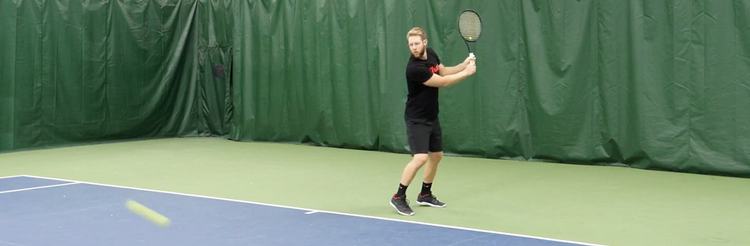
No matter what you’re building, you can’t underestimate the importance of a solid foundation. From learning new skills to constructing a house, if your foundation is weak then it sets the rest up to fail. No matter where you are in your tennis journey, it is never too late to improve on your foundational skills – even the best players out there spend ample time perfecting the basics.
Scott and Nate at Play Your Court are here to help lay that foundation with their 5 Tips to Improve Your Two-Handed Backhand.
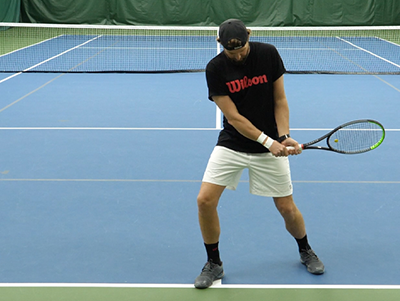
1. Choose the Correct Grip
This may be the most important tip to improve your two-handed backhand – again, back to basics! Your dominant hand on the bottom must be the continental grip. Your top hand can either be the eastern forehand grip or the semi-western grip. Either combination will set you up for a successful backhand.
2. Turn Sideways
As soon as you see the ball coming to your backhand, initiate the unit-turn. The unit-turn is where your upper body coils and takes the racket back, preparing the racket for the forward swing. When the unit-turn is performed correctly, the shoulder of the dominant side will be under the chin.
3. Move Your Feet
By getting sideways early, you can easily adjust your feet to keep the ball on the outside of the body and in the optimal hitting zone. Additionally, if you are put on defense, you can easily run to the ball while still coiling your upper body in the unit-turn. Too often players try to side shuffle to the ball, making quick movements and timing the contact difficult.
What are the three common mistakes most players are making with their backhand shots?
5. Keep Your Racket Head Above Your Hands
Whether you take your racket back in a loop or straight back, your racket head needs to be above your hands in the “power position” before initiating the forward swing.
6. Contact the Ball In Front Of Your Body
Keep your hands relaxed so your racket head can drop below the ball. Swing up and through, allowing your non-dominant hand (top hand) to do the majority of the work. Make contact in front of your body, near your front foot, and let the racket work up to the follow through. A good follow through will have the non-dominant elbow in front of the chin and the buttcap facing your opponent.
So you’ve got the basics down – now how do you apply them? Check out Play Your Court’s video on taking the next step to turn your backhand into a weapon on court.
If you play with a one-handed backhand, then stay tuned – we’ve got tips for that coming soon! In the meantime, check out this video tutorial from none other than Roger Federer, the king of the one-handed backhand, to get you started!

/en-us/blog/tennis/team/roger-federer-new-tennis-racket-journey-innovation-and-legacy
The Making of Roger Federer’s New Tennis Racket: A Journey...
Discover the special tennis collection co-designed with legend Roger Federer: the RF Collection...

/en-us/blog/sportswear/wilson-labs/pro-staff-87-shoe-timeless-icon-reborn
The Pro Staff 87 Shoe: A Timeless Icon Reborn
Rediscover an icon. The Pro Staff 87 returns, blending timeless style with modern comfort for...

/en-us/blog/footwear/wilson-labs/introducing-new-rush-pro-45-tennis-shoe
Introducing the New Rush Pro 4.5 Tennis Shoe
Discover Wilson’s latest innovation in tennis footwear with the new Rush Pro 4.5 Shoes.