How to Choose a Tennis Racket (Size, Weight & Grip Guide)
If you're wondering how to choose a tennis racket, you're not alone. Whether you're buying your first frame or upgrading your current one, choosing the right tennis racket (or tennis racquet) can dramatically improve your comfort, confidence, and performance on court.
From tennis racket size and weight to grip size and string pattern, this complete tennis racket size guide walks you through everything you need to know — including how to answer the most common question:
What size tennis racket do I need?
Let’s break it down step by step.
Pro Tip: If you love details, read on. If you are ready for the summary, skip to the end for your shortcut to find the perfect racket for you by player level and to sign up for emails so you can stay up to date on all the latest Tennis tips and news from Wilson.
Step 1: Decide How Much Power vs. Control You Need
Every tennis racket is designed to balance power and control, and choosing a tennis racket starts with understanding how you generate pace and spin.
- More power typically comes from a larger head size, lighter weight, and open string pattern.
- More control usually comes from a smaller head size, heavier frame, and denser string pattern.
If you’re still developing your strokes or don’t consistently hit the sweet spot, lean toward power and forgiveness with Wilson Ultra or Clash. If you swing fast and strike cleanly, you’ll benefit from more control and precision with Wilson Blade or Pro Staff.
Step 2: Choose the Right Head Size (Tennis Racket Size Guide)
Head size is one of the most important elements in tennis racket sizing. It’s measured in square inches and directly affects forgiveness and feel.
If you’re asking, “What size tennis racket is best?” — head size is where to begin.
Midsize / Midplus (Under 106 sq in)
- More precision and control
- Smaller sweet spot with less margin for error
- Better for experienced players
Oversize (106+ sq in)
- More power
- Larger sweet spot
- More forgiveness on off-center hits
Quick Tennis Racket Size Chart
This simple tennis racket size chart helps answer the common question:
“What size tennis racket do I need?”
In general:
- Beginners benefit from oversize heads for easier contact.
- Intermediate players often move toward midplus.
- Advanced players typically prefer smaller head sizes for control.
Step 3: Pick the Right Racket Weight
Weight is one of the most important yet overlooked factors when buying a tennis racket.
Most adult tennis rackets range from 9–12 ounces (strung).
Lighter Rackets (9–10 oz)
- Easier to swing
- Less fatiguing
- Good for beginners and recreational players
- Trade-off: Less power stability against heavy shots
Heavier Rackets (11–12 oz)
- More stability
- More plow-through power
- Greater control
- Trade-off: Potential arm or shoulder discomfort if too heavy
If you're shopping for an adult tennis racket size, remember that weight and head size work together. A heavier frame with a smaller head offers control, while a lighter oversize frame offers easy power.
Lighter rackets are best for Beginners, juniors, smaller players, or anyone with arm discomfort. Heavier rackets are best for stronger, aggressive players with fast swings
Pro Tip: Wilson labels lighter rackets with UL (Ultralight) or L (Light) in the name.
Less powerful
Less stable
Less maneuverable
Higher injury risk
Step 4: Match the Racket to Your Swing Style
Your swing path matters just as much as your experience level.
- Shorter or flatter swings typically benefit from rackets that generate power.
- Vertical swings that naturally create topspin often pair well with control-oriented frames.
String Pattern Matters
16x19 (open pattern)
- More spin potential
- Larger sweet spot
- More forgiving
18x20 (dense pattern)
- Flatter trajectory
- More precision
- Greater directional control
When choosing a tennis racquet, match the frame to how you swing — not just how long you’ve played. Players who play with shortened or flat swings will like the Ultra or Clash. Players with vertical swings will like Pro Staff or Blade.
Step 5: Understand Tennis Racket Balance & Length
Rackets can be head-light, head-heavy, or even-balanced.
Balance is shown in “points.” Negative numbers indicate head-light; positive numbers indicate head-heavy. Smaller numbers close to 0 indicate more evenly balanced rackets.
Head-Light
- Easier to maneuver
- Less vibration
- Popular in heavier, control frames
Head-Heavy
- More built-in power
- More stability on off-center hits
Tennis Racket Length
Standard tennis racket length is 27 inches.
Extended-length rackets (27.25–27.5 inches) provide:
- Extra reach
- More leverage
- Slightly more power
If you’re researching tennis racquet size for adults, most players use standard length. Junior players may require shorter rackets based on height.
Step 6: Choose the Right Strings & Tension
Strings dramatically affect feel and performance.
String Type
Beginners / Intermediates / Seniors / Tennis Elbow
- Multifilament or synthetic gut for comfort
Advanced Players
- Polyester for durability and control
String Tension
- Higher tension = more control
- Lower tension = more power
A good starting range for multifilament is 53–55 lbs.
If using a hybrid setup, string polyester about 2 lbs lower than multifilament.
Avoid stringing full polyester above 54 lbs due to stiffness.
For more details on strings: How to Choose A Tennis String
Reduced vibrations in the handle
Easier to maneuver
Less maneuverable
Higher injury risk
Step 7: Optimize Frame Material for Your Game
There are three primary racket frame materials:
Carbon Fiber
- Stiff and powerful
- Preferred by competitive players
Graphite
- Balanced feel
- Good blend of power and comfort
- Ideal for intermediate to advanced players
Aluminum
- Lightweight
- Flexible
- Best for beginners and recreational use
Many modern tennis rackets use composite blends to combine the best properties of each material. Performance rackets will feature carbon fiber or graphite, while recreational rackets will feature graphite or aluminum.
Powerful
Stable
Durable Performance
Efficient shock absorption
Nice blend of power and control
Soft
Lightweight feel at low price point
Less arm-friendly feel
More Expensive
Less Powerful
More feedback with ball contact
Step 8: Pick the Right Tennis Racket Grip Size
Grip size is one of the most searched elements of tennis racket sizing, and it’s critical for comfort and injury prevention.
Standard adult tennis racket grip size options:
- 4” (Size 0)
- 4 1/8” (Size 1)
- 4 1/4” (Size 2)
- 4 3/8” (Size 3)
- 4 1/2” (Size 4)
- 4 5/8” (Size 5)
Most adult women commonly use 4 1/4" (Size 2).
Most adult men commonly use 4 3/8” (Size 3).
If you’re unsure how to measure tennis racket grip size, choose the slightly smaller option — you can always add an overgrip. For more details about what size is best for you read 4 Steps to Determine Your Tennis Racket Grip Size.
Proper grip size helps prevent tennis elbow and improves control.
Choosing a Wilson Tennis Racket
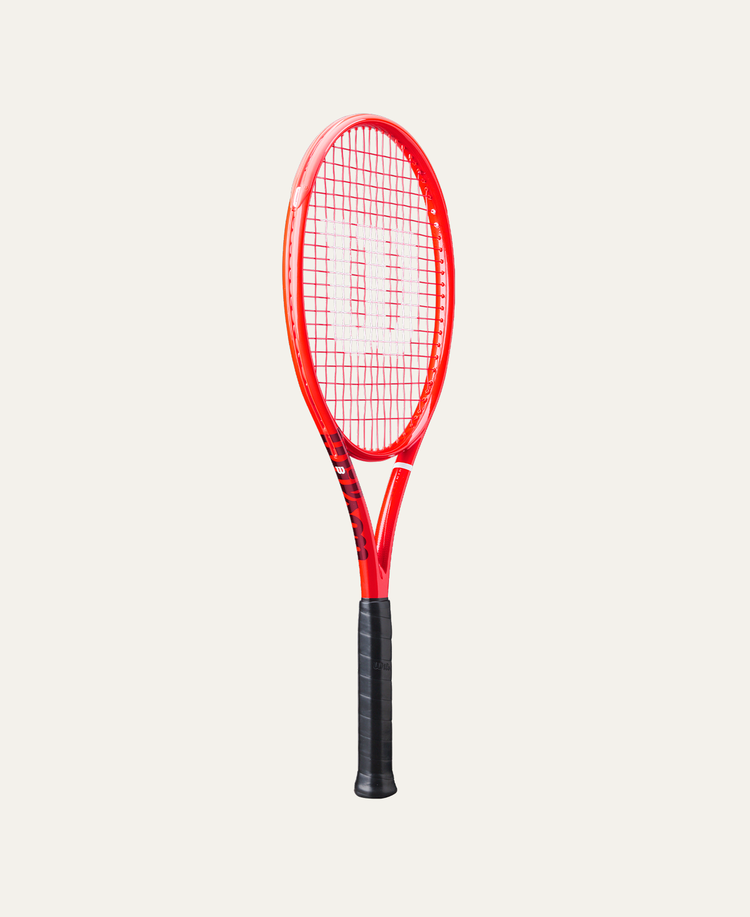
Here is a summary of the Wilson performance lineup and how it can fit your tennis game. Go play!
Select Your Racket:




Shortcut: Find the Best Tennis Racket by Skill Level
Best Tennis Racket for Beginners
Players first learning the game of tennis should start with a light racket featuring a larger head size, often called an “oversize” racket. This will help them make contact with the ball consistently while learning to rally without wearing out their arm as their muscles get used to the game.
A true tennis racket for beginners should include:
- Oversize head (105–110 sq in)
- Lightweight frame
- Larger sweet spot
- Easy access to power
These features make it easier to rally and develop consistent strokes.
Recommended: Wilson Ultra or Clash
Best Intermediate Tennis Racket
Intermediate players should start to reduce their head size and add a little more weight to their racket as their tennis muscles develop and they learn to generate more pace on their own. This will allow them to keep their new-found power under control. These players typically benefit from:
- Oversize (105–110 sq in) or Midplus head size (100–105 sq in)
- Medium weight
- Balanced power and control
Recommended: Wilson Clash, Blade, or RF Collection
Professional Tennis Racket / Advanced Players
Advanced players should be using “mid-size” rackets that allow them to play with control, feel and precision. These three benefits will provide a more connected-to-the-ball feel, allowing players to play more confidently as they go for their shots. Look for:
- Midplus (100–105 sq in) to midsize heads (95–100 sq in)
- Medium to Heavier frames
- Maximum control, feel, and precision
- Dense string patterns
Recommended: Wilson Blade, Pro Staff Classic, Ultra, or RF Collection
Quick Comparison: Power vs. Control
FAQ
What size tennis racket do I need?
Most beginners need 105–110 sq in head size with a lightweight frame. Intermediate players move toward 100–105 sq in. Advanced players often prefer 95–100 sq in for control.
How do I choose a tennis racket for beginners?
Look for oversize head size, lighter weight, comfortable strings, and proper grip size.
Does tennis racket weight matter?
Yes. Lighter rackets are easier to swing but less stable. Heavier rackets offer more control and stability but require stronger mechanics.
What is the standard tennis racket length?
Standard length is 27 inches. Extended frames offer more reach and leverage.
Explore Wilson’s full lineup to find the right fit for your game. Once you've picked you're perfect racket, be sure to check out our performance sportswear and tennis shoes to bring your best kit to the court.
Updated March 2026
Want more tips like this? Get them in your inbox.
Sign up for our newsletter and receive 15% off your first purchase on regularly priced sportswear or items from the tennis deals page. Plus, be first to know about new racket launches, expert tips, and upcoming events.