Protect Home Field
Circular Business Models
Circular business models promote sustainability by replacing the traditional “take, make, dispose” approach with reuse, repair, and recycling. This helps conserve resources, reduce waste, and lessen environmental impact, tackling issues like resource depletion and climate change.
If a football won’t stay inflated, it needs a bladder repair. Wilson will replace an air bladder and laces on any leather football that was manufactured by Wilson. Any size football can be sent to us for a replacement bladder and new laces, all done at Wilson’s football factory in Ada, Ohio. Some exclusions apply, so please see our website for more information.
Our “Come Play with Us” initiative is a new, three-pronged commitment to the community that offers equipment rental, court rentals and free weekly programming at five of our retail locations. You’ve always been able to playtest equipment at our retail stores, but “Come Play with Us” goes a step further. Whether you’re interested in trying a new sport or are just an occasional player, we know purchasing new equipment can be a barrier to entry. Renting equipment is also better for the environment because it reduces the overall demand for new manufacturing, which often involves resource extraction and energy consumption.
Louisville Slugger teamed up with Traeger to turn waste into a flavorful experience for both barbecue lovers and baseball fans. The wood used in Traeger® Louisville Slugger Pellets comes from maple trees in the forests of New York and Pennsylvania—regions renowned for producing the finest wood for crafting baseball bats. Through this collaboration, Traeger repurposes the byproducts of bat manufacturing, transforming leftover wood into premium wood pellets for grilling. This collaboration not only gives new life to discarded materials but also celebrates the common passion for both barbecue and baseball.
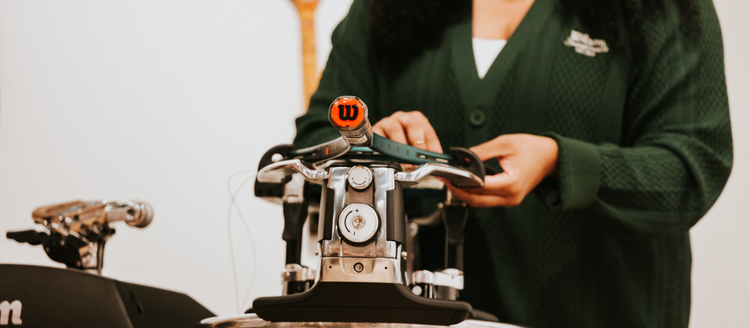
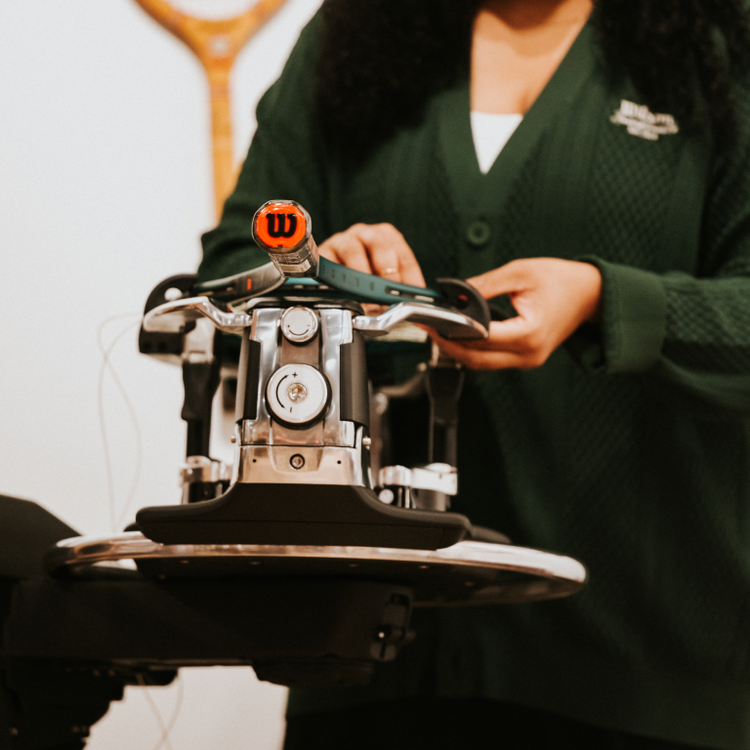
Racquet Sports took their racket Trade-in and Trade-up program one step further in 2024 to ensure that no rackets shipped to our warehouse were thrown away. The rackets that were still in playable condition were donated to the USTA. The rackets that were not in playable condition were donated to a Chicago not-for-profit, Nowhere Collective. They repurposed the rackets for a cross-stitch craft at their “Trashy” Holiday Market. By partnering with Nowhere Collective, we were able to give unplayable rackets a second life, repurposing them rather than discarding them.