Super Bowl LVII Artist Spotlight: Lucinda Hinojos
Learn more about our Super Bowl LVII football collaboration with an Arizona native and muralist— Lucinda Hinojos. Her new Duke design features emblematic artwork honoring her Chicana culture.
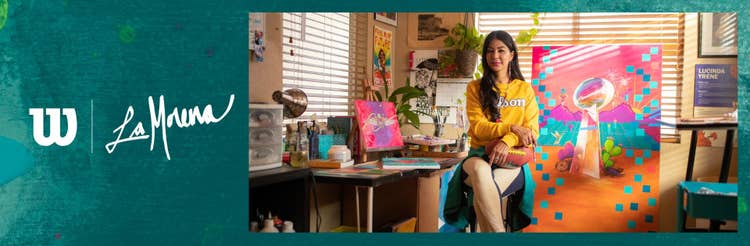
Since 1967, the Wilson Duke has been the centerpiece of each and every NFL Super Bowl. Of these 56 Super Bowls, all 56 have been played on Native Land. This year muralist Lucinda Hinojos (also known as La Morena) will create history and change the narrative by honoring her Chicana and Indigenous cultures at Super Bowl LVII with her bold and emblematic artwork.
Super Bowl LVII will take place in Glendale, AZ on February 12, 2023. This will mark the first time the NFL and Wilson Sporting Goods have come together to honor Native America at the largest sporting event in US history.
Hinojos traces her roots to Mexico and the Pascua Yaqui and White Mountain Apache tribes along with the O'odham and Chiricahua Apache peoples. She has created unique artwork that will be featured on the Wilson Duke football, and all 60,000 of the Super Bowl LVII tickets. She also painted a 9,500-square-foot mural that will be on display at the Monarch Theatre in downtown Phoenix.
Attendees will also see La Morena’s artwork featured on posters surrounding the area leading up to State Farm Stadium.
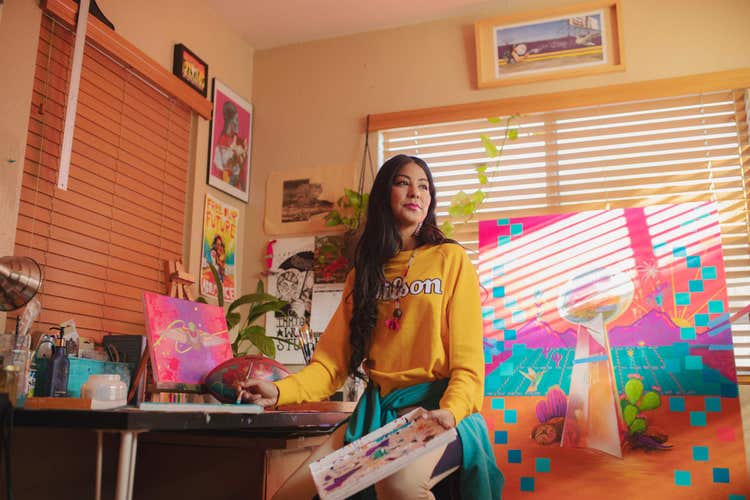
Who is La Morena?
Hinojos never dreamed of being an artist. As a child, Lucinda grew up in Arizona playing competitive soccer where she received a scholarship to play collegiate soccer at Glendale Community College.
It was at this time, at 18 years old, that Hinojos realized she was pregnant.
She made the courageous decision to put her college soccer career on hold to give birth to her first son, Dominic. She is now a mother of three.
In 2011, Lucinda discovered her passion for art in therapy.
“When I’m painting, I enter this meditative state where I am not thinking about tomorrow or what happened yesterday,” said Lucinda. “I really connect with what I am doing and become intimate with the piece. When I do this, I put all of my energy into the art— others can feel that.”
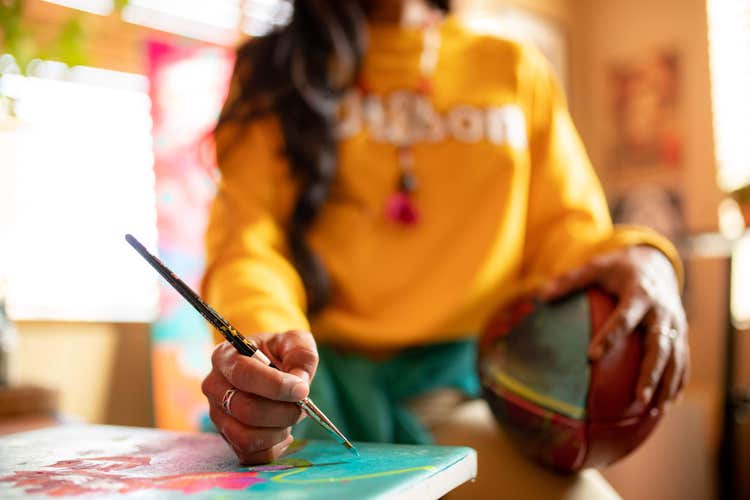
“I always see art as medicine. It is a form of therapy,” she explained.
From therapy, Hinojos began to dabble in the art world. From attending an underground graffiti art show in 2011 to orchestrating her first show in 2012, her artistic career began to evolve exponentially.
In 2015, Hinojos volunteered to assist with a mural in downtown Phoenix. The artists were wrongfully asked to halt their work because their art depicted images of immigration. Hinojos took it upon herself to see the mural through at an alternative site.

Lucinda standing in front of her mural titled “No More Stolen Sisters” that calls attention to missing and murdered indigenous women (Photos courtesy of @lamorena_art)
“Because of that moment, it changed my perspective on immigration,” said Hinojos. “I thought if this mural can change my perspective, imagine the many more I could do that for. This mural awakened me politically, spiritually, and culturally. I knew I wanted to paint murals that addressed social issues or issues that needed immediate awareness.”
And that is just what Hinojos has done. In addition to tackling socio-political issues, Hinojos' art explores her culture and spirituality.
“I am noticing the impact my murals have on people,” Lucinda explained.
“When I paint these murals, they become a magnet. They draw people in and make the community more engaged. The community sees themselves in these murals and that becomes inspiring— it gives them hope. The murals say, ‘I see you.’ And that is what brown and indigenous communities have been fighting for—to feel seen, to let people know we are still here.”
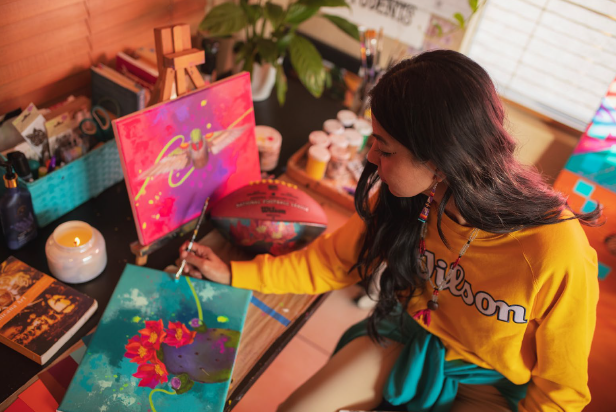
Lucinda is now a nationally recognized muralist and painter. She has shown in several galleries and museums across the United States, including La Bodega in San Diego, CA, Frost Gallery in Brooklyn, NY, Tangent Gallery in Milwaukee, ASU Gammage, Arizona History Museum and NAU Art Museum. And she has worked alongside social justice organizations.
The Duke
Each design component of the Wilson game ball represents something bigger to Hinojos.
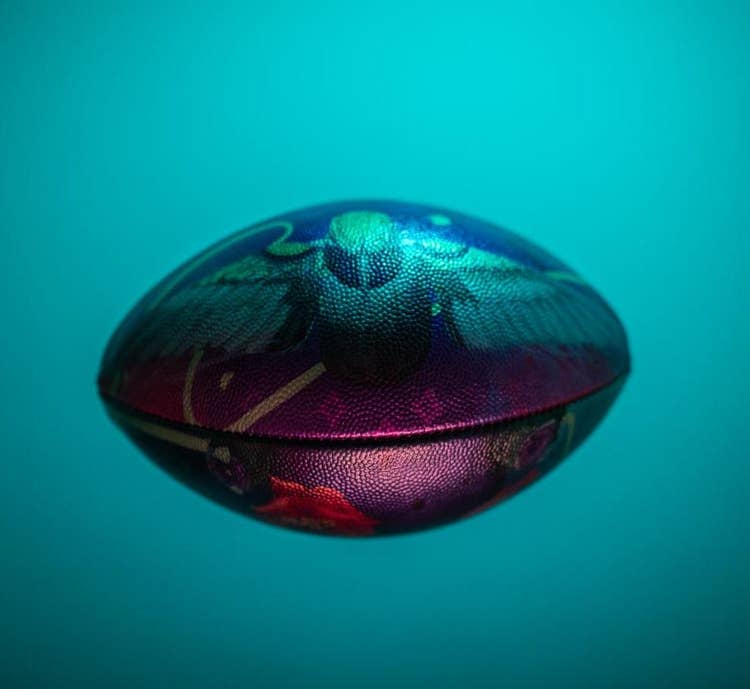
There are 22 native tribes in Arizona, and the Super Bowl will take place on Native homeland (State Farm Stadium was once a cornfield that was an essential food source to many Native nations). That's why each design component on the Duke will represent part of Hinojos’ Chicana culture.
Take the hummingbird for example.
“The hummingbird is deeply connected to me spiritually,” said Hinojos.
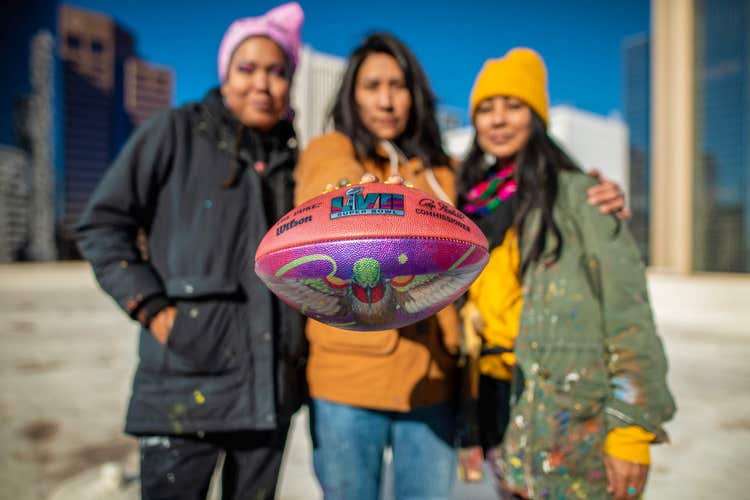
“I don’t just paint a hummingbird because it’s pretty. In Aztec culture, they are Huitzilopochtli— that’s how you say hummingbird in Nahuatl. In the Aztec culture, when a warrior has fallen, they reincarnate into Hummingbird. So sometimes when a loved one passes, they'll show up as a hummingbird. Especially if they're making lots of noise and being loud, you know it's them—your loved one! And on the Native side, the Apaches, we see them as lightworkers and messengers.”
Additionally, much of La Morena’s football design inspiration was pulled from the Salt River (Pima (O’odham)-Maricopa) Reservation that sits on the eastern edge of Phoenix.
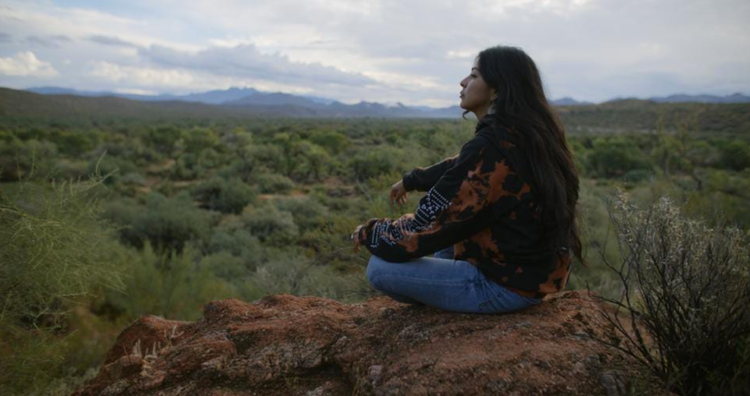
Image Courtesy of The National Football League
Hinojos spends lots of time with the Salt River land. “My teachers are the plants, the elements, the winged and the four-legged,” she explained.
“When you see a cactus in my work it’s not just a cactus. It represents something more. It’s food, it’s medicine. I use these bright colors because of the energy shift you feel when you look at them— like the bright orange and the magenta.”
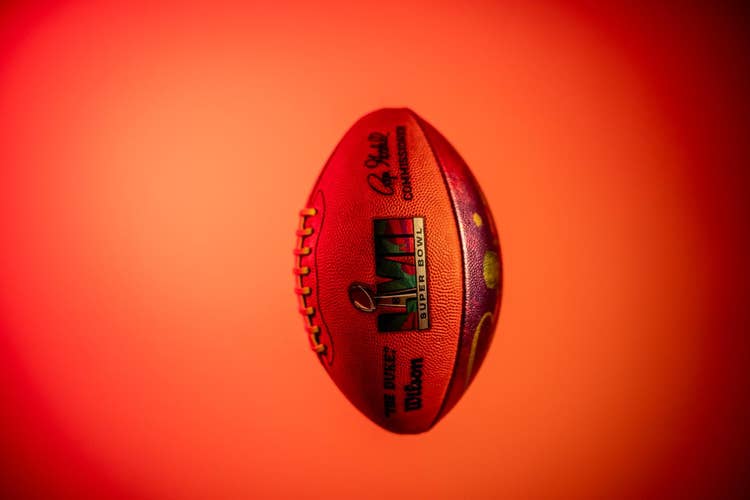
Why Wilson?
“I am beyond thrilled and so proud to be in this space because I really see a cultural shift happening,” said Honojos with a large smile on her face.
“To be a part of that means so much to me, my family, and to my community. This has been a process of reclamation of space— especially working with Wilson and the NFL— it’s a space with a large reach, a large audience… Being in this space, we get to say we are still here. And by doing this football design with Wilson— I am just so proud to represent my people. I don’t speak for all native people. I am just one, and I am speaking from my experience as a brown Chicana person.”
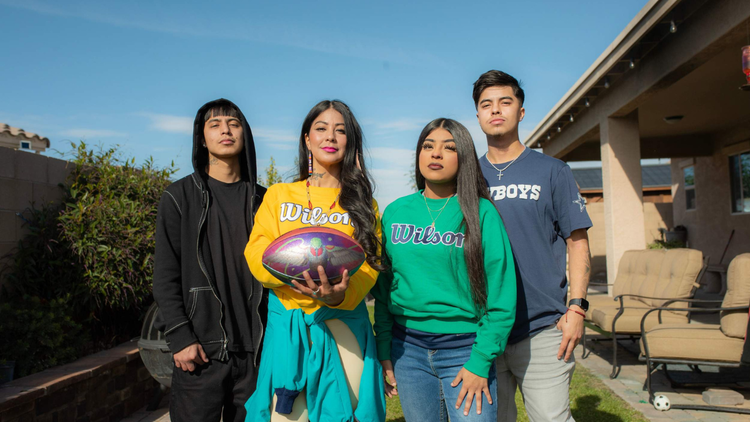
When asked what similarities Lucinda sees between sport and art, she immediately answered "self-confidence and determination."
Her career as a soccer player taught her these principles at a young age, and she has seen the skills transfer over to her art.
“Sports and soccer specifically were a huge pusher for me,” explained Hinojos. “It gave me self-confidence and determination. So when I became pregnant at 18, I used this determination in my art to get me through it. I eventually had my two sons, went back to school and played soccer on a scholarship with my two boys watching their mom from the sidelines,” she said.
“You know, there are always going to be obstacles in life, but sports and art have shown me that everything is figure-out-able.”
Shop Our Limited Edition La Morena Super Bowl LVII Football

- Updated February 9, 2023

/en-us/blog/football/how-tos/how-make-nfl-game-football
How NFL Footballs are Made
Take a behind the scenes look at how every NFL Wilson Duke leather game ball is made from start...

/en-us/blog/football/events/wilson-x-2023-nfl-london-game-recap-art-football-and-philanthropy
Wilson X 2023 NFL London Game Recap: Art, Football, and...
As Official Football of the NFL, Wilson is proud to have been part of the 2023 NFL London Games...

/en-us/blog/football/behind-scenes/wilson-x-2023-nfl-training-camp-0
Wilson x 2023 NFL Training Camp
Join us on the ground at training camp ahead of the 2023 NFL season. ...